

How to Choose the Right Folding Carton Manufacturer for Your Product, Part 2: Box Styles, Logistics, and the Right Partner

Choosing the right folding carton requires more than selecting a box shape. The final structure must fit the product, support the customer experience, move efficiently through packing and distribution, and be realistic to manufacture on the required schedule. The right packaging partner helps connect all of those decisions before production begins.

In Part 1, we covered the strategic foundation: purpose, audience, sizing, materials, brand presentation, and sustainability. Now it is time to translate that strategy into a carton style and a workable production plan.
Choose a box style based on how the product will be sold and used
There are many folding-carton structures, and no single style is right for every product. Start by considering product access, security, display, visibility, packing method, and the amount of printable space the brand requires.
Window boxes

A window box gives customers a view of the product while retaining the printable surfaces and structure of a carton. It can be useful when color, texture, shape, or product arrangement influences the purchase decision.
Window size and placement should be planned carefully. The opening must complement the carton structure, protect the product appropriately, and frame what the customer should see. The window material and attachment method should also be considered as part of the package’s performance and sustainability goals.
Tuck-top boxes

Tuck-top cartons use one or more flaps that tuck into the body of the box. They are widely used because they can provide convenient access, a clean presentation, and efficient assembly for many product types.
The best tuck configuration depends on how the carton will be filled, whether the closure needs additional security, how often the customer will reopen it, and which panels should face forward in retail or online photography.
Display boxes

Display cartons are designed to present products visibly at the point of sale. Some structures convert from a shipping or holding configuration into a retail display, helping products stay organized while increasing brand presence on a shelf or counter.
For these cartons, structural design must account for both transportation and display. The finished package should be practical for store personnel to open and position while remaining stable and visually effective during use.
These are only a few examples. A folding-carton producer can help compare standard structures, adapt an existing style, or develop a custom solution when the product requires something more specific.
Evaluate usability before approving the structure
A carton may look successful in a flat dieline or digital rendering but behave differently when assembled, filled, stacked, and opened. That is why usability should be evaluated from more than one perspective.
Packing team: Is the carton straightforward to form, fill, and close consistently?
Warehouse team: Does the finished format store and move efficiently?
Retailer: Is it easy to stock, display, scan, and handle?
Customer: Is it easy to understand, open, use, and—when appropriate—reclose?
Brand team: Does the assembled box present the graphics and product as intended?
A structural prototype can reveal issues that are difficult to identify on screen, including awkward flap sequences, insufficient clearance, weak display angles, or graphics that shift onto unexpected panels.
Plan for shipping and transportation
The retail carton is only one part of the product’s distribution system. Its dimensions and strength can affect how products are packed into cases, placed on pallets, transported, and delivered.
Before finalizing the carton, consider the expected shipping method, case-pack quantity, stacking conditions, handling frequency, and destination. A small dimensional change can sometimes influence how efficiently cartons fit into an outer case or on a pallet, which can affect material use and transportation efficiency across a large production run.
The goal is not to overbuild the carton. It is to understand the conditions it will face and design the complete packaging system accordingly.
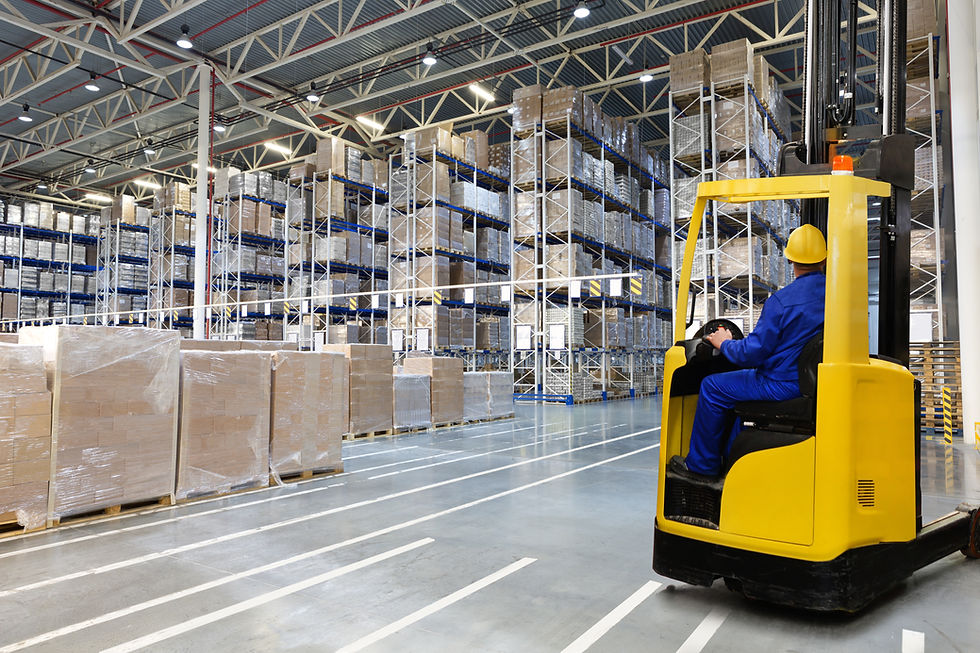
Think through warehouse and fulfillment needs
Folding cartons are often shipped flat to conserve space, then formed and filled when needed. Storage space, inventory practices, fulfillment speed, and packing equipment can all influence the best production and delivery plan.
Discuss questions such as:
How many flat cartons can be stored safely and conveniently?
Will cartons be delivered in one shipment or scheduled releases?
How quickly can the packing operation use each quantity?
Are there seasonal demand changes or multiple product variations to coordinate?
Does the warehouse have specific bundle, case, label, or pallet requirements?
Aligning packaging production with inventory and fulfillment needs can help reduce avoidable handling, storage pressure, and last-minute shortages.
Build realistic lead times into the launch plan
Folding-carton production involves several connected stages. Depending on the project, these may include structural design, estimating, material sourcing, artwork preparation, proofing, tooling, printing, finishing, die cutting, folding, gluing, inspection, packing, and delivery.
New cartons and specialty finishes may require more development time than a repeat order. Artwork changes, material availability, proof approvals, and production quantities can also influence the schedule.
Share the required delivery date early and work backward with the manufacturer. It is also wise to plan reorders before inventory reaches a critical level rather than assuming every future run will follow the exact timing of the first.

How to choose the right folding carton manufacturer partner
A strong packaging partner does more than manufacture an approved file. The right team can help connect product requirements, structural design, graphics, materials, finishing, equipment capabilities, quality expectations, and scheduling.
When evaluating a folding-carton producer, look for:
Relevant experience: A history of producing folding cartons and solving packaging challenges for a range of products.
Structural and design support: The ability to help refine dimensions, box styles, dielines, prototypes, and production-ready artwork.
In-house production capabilities: Clear information about which printing, finishing, converting, folding, and gluing processes are managed within the facility.
Equipment matched to the project: Production resources that can support the required carton style, quantities, quality, and finishing details.
Communication and customer service: A team that asks detailed questions, explains tradeoffs, provides realistic timelines, and stays engaged through production.
Quality processes: Consistent review and inspection practices that support repeatable results from run to run.
All these points are essential for how to choose the right folding carton manufacturer.
How to Choose the Right Folding Carton Manufacturer: Questions to ask before requesting a folding-carton quote
A productive first conversation should cover more than price. Be prepared to ask:
Which box structures would you recommend for this product and distribution method?
What product samples, measurements, artwork, or technical details do you need?
Can you provide structural samples or prototypes before production?
Which materials, printing methods, coatings, and finishes are best suited to the project?
Which parts of the work are produced in-house?
What factors may affect lead time, cost, or minimum quantities?
How should future reorders and inventory planning be handled?
Bring the complete packaging system together
The ideal folding carton is not chosen from a list of styles in isolation. It is developed by connecting the product, customer, brand, packing process, distribution environment, schedule, and production capabilities.
When those factors are addressed early, packaging is more likely to protect the product, present the brand effectively, run smoothly through operations, and create a positive experience for everyone who handles it.
International PaperBox combines decades of folding-carton experience with design support and in-house production of high-quality paper boxes.
Contact our team to discuss your product, timeline, quantities, and packaging goals.
Frequently asked questions
What are common types of folding cartons?
Common examples include tuck-top cartons, window boxes, and display cartons. Many additional standard and custom structures are available. The right choice depends on the product, packing method, display requirements, security, usability, and distribution environment.
Should I request a prototype before production?
A structural sample or prototype is especially valuable for a new carton. It allows the product and packing team to evaluate fit, assembly, access, display, and panel placement before committing to the full production run.
What information does a folding-carton manufacturer need for a quote?
Typical information includes product dimensions and weight, desired box style, estimated quantities, artwork or print requirements, materials, finishes, packing method, shipping destination, and required delivery date. A physical product sample can also be helpful.
What affects folding-carton production lead time?
Lead time can be affected by structural development, artwork readiness, proof approvals, material availability, tooling, printing and finishing complexity, quantity, production scheduling, and delivery requirements.
Why does in-house production matter?
In-house capabilities can give a packaging producer closer visibility into scheduling, quality, and coordination across manufacturing steps. The most important question is whether the producer’s actual equipment and processes meet your project's needs.


Comments